

Choosing a Healthcare Marketing Agency: Key Factors for Success
Healthcare marketing requires careful judgment. The agency must attract patients, communicate effectively, and comply with all relevant legal requirements.
Healthcare marketing involves specific constraints. These include privacy laws, regulatory reviews, and limits on how services can be promoted. Errors carry legal and reputational risk.
This article explains how to evaluate healthcare marketing agencies using specific, practical factors. It is intended to guide healthcare providers through the selection process with clarity and precision.
The importance of digital marketing in healthcare
Introduction to healthcare digital marketing
Patients now search online to choose providers, relying on service details, reviews, and direct booking, often without contacting a GP. Clinics that appear in results use complete listings, clear structure, and current information.
Why digital marketing is crucial for healthcare
Patients judge providers based on what they read: services offered, prices shown, booking access, and professional background. Email, social posts, and forms streamline updates, bookings, and follow-ups, eliminating the need for phone calls or delays.
When content is direct and factual, it answers questions, reduces doubt, and keeps the patient engaged. A strong digital presence enhances the customer experience and supports improved patient care outcomes.
Challenges in healthcare digital marketing
Healthcare marketing in the UK is subject to strict regulations. All claims need evidence. Content must meet ASA and GMC standards, and patient data cannot be used without explicit consent per the UK GDPR. Messaging must stay within clinical limits and avoid generic offers or sales-driven language.
Agencies without healthcare experience often overlook these requirements. Many lack review workflows, risk controls, or compliance checks. Effective healthcare marketing requires technical knowledge, regulatory accuracy, and clear oversight, backed by healthcare marketing research to avoid missteps and align with the expectations of healthcare professionals.
Results if your marketing agency does a good job
Growth in patient acquisition and retention
Targeted campaigns bring the right patients to the right pages. When search results match intent and booking steps are clear, more visitors convert into appointments.
Post-visit contact through reminders, follow-up messages, or tailored content keeps patients engaged without relying on external prompts.
Brand reputation and trust
Patients form opinions before contact, based on what they see online. Clear service details, consistent branding, and verified reviews reduce hesitation. Profiles featuring named clinicians, transparent pricing, and recent feedback result in more bookings and referrals.
ROI through data-led execution
Effective campaigns rely on measurable inputs. Search traffic, booking behaviour, and ad response rates point to what brings results. Instead of guessing, agencies adjust based on cost per enquiry, traffic quality, and conversion patterns, redirecting effort towards what delivers value. This benefits from structured market research and evidence-based research methodologies.
Long-term practice growth
Sustained campaigns create momentum. As rankings climb and referral links spread, the practice attracts more traffic without increasing spend. Each published article, updated profile, or successful ad builds visibility across channels, keeping the practice ahead in a competitive market.
Consequences if your marketing agency does a bad job
When campaigns misread patient needs or search intent, the wrong people land on the site, or no one does. Vague headlines, unclear offers, or irrelevant messaging create confusion instead of action. Visitors leave without booking, and no system captures or follows up on lost interest.
Negative impact on search rankings and website performance
Weak SEO practice pushes pages down in search results. Overuse of keywords, poor page structure, and ignored technical issues reduce visibility and slow down the site. Search engines prioritise reliable content, and even reputable services can become difficult to find.
Increased competition from better-positioned practices
Stronger clinics fill the gap left by poor marketing. Their pages appear higher, their ads convert better, and their names become familiar. As they attract more patients, weaker practices fall behind, even if their care quality is higher.
Stress and inefficiency
Fixing broken marketing consumes time. Staff answer fewer enquiries while chasing no-show patients and responding to confused or misled visitors. The clinic spends resources addressing problems caused by the agency, while the core work of care delivery suffers.
Key factors to look for in a healthcare digital marketing agency
Agency scorecard
Is this the right healthcare marketing agency?
Tick each box an agency genuinely meets. Your score updates as you go.
Make sure they understand your specific healthcare marketing needs
Each practice sets different priorities, whether it is gaining new patients, increasing local visibility, or reducing drop-offs after the first contact.
An agency must start with clear questions: What outcomes matter? What resources are available? What challenges are tied to your location, speciality, or patient base?
Without that baseline, strategy becomes guesswork, so healthcare marketing research is needed to clarify these points.
Look for healthcare industry expertise and experience
Healthcare marketing involves constraints that general agencies often miss: clinical accuracy, advertising rules, and patient trust. Agencies with sector experience know how to position regulated services, avoid non-compliant claims, and navigate review cycles effectively. Campaigns grounded in this experience run more smoothly and yield cleaner results. This includes marketing for specialised services like medical devices, which require additional knowledge.
Assess their track record with healthcare clients
An agency’s past work reveals what it actually delivers. Case studies should show patient growth, retention patterns, and measurable returns over time, not just traffic spikes.
Strong testimonials show how the agency responds to challenges, adjusting strategy when patient numbers drop or audience behaviour shifts, not just producing deliverables.
Evaluate their digital marketing capabilities
Healthcare marketing spans search, paid ads, content, and communication. A capable agency must cover the whole mix, from SEO that targets local keywords to PPC ads tuned for clinical relevance and cost control.
Campaigns must be linked to clear landing pages, email flows, and review management. Generic templates or disconnected channels waste budget and lose patient interest. An effective content strategy should align with product development cycles to promote new services or treatments.
Healthcare clinics differ widely by speciality, audience, geography, and scale. An agency should build campaigns around those realities. A single-location dental practice needs different tactics from a private surgical group. Strategies must match patient behaviour, referral sources, and service lines, not follow fixed packages or repurposed content.
Prioritise transparency, communication, and collaboration
Good results depend on clear reporting, regular feedback, and shared accountability. You should understand how the agency tracks performance, which actions follow low-conversion trends, and how results are tied back to goals. Passive updates or vague reports waste time, but a responsive agency means you act early when something stalls.
Budget and ROI considerations
Agencies use different pricing models, but clear terms matter more. What’s included? What outcome is realistic for the spend? A lower fee with no results is not value, but a higher cost with consistent patient growth is.
6 questions to ask healthcare marketing agencies before you make a decision
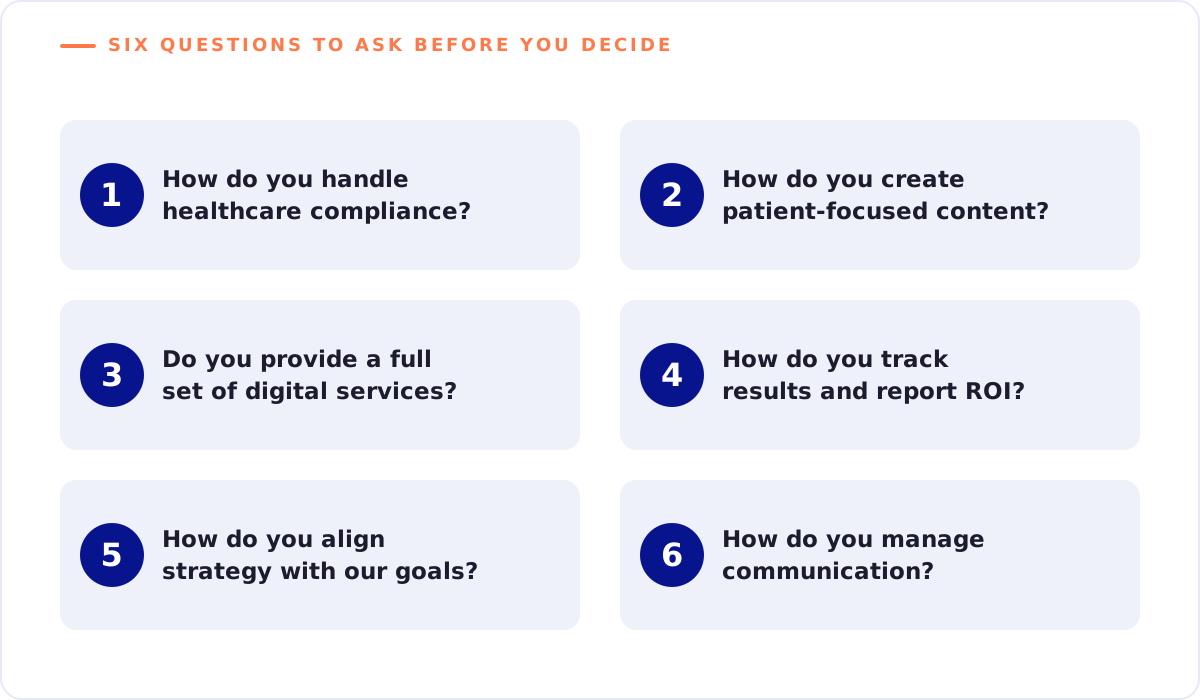
How do you handle healthcare compliance?
Any agency working in this space should show transparent processes for meeting GDPR, ASA rules, and other healthcare-specific requirements. Look for examples where it’s managed, regulated content, protected patient data, or navigated clinical review without delays or risk.
How do you create patient-focused content?
Effective healthcare content is concise, clear, and tailored to address patient concerns. Ask how it adjusts tone, covers sensitive topics, and stays within clinical limits, including insights from healthcare professionals and feedback from market research.
Do you provide a full set of digital marketing services?
Check whether they manage SEO, paid search, web design, and patient communication in one place. Fragmented services often lead to misalignment. One team should be responsible for planning, execution, and performance across all channels.
How do you track results and report ROI?
A capable agency tracks core metrics, such as search position, conversion rate, and cost per inquiry, and adjusts campaigns based on the results. Reports should come regularly, tie results to actions, and show what changes when performance drops.
How do you align strategy with our goals?
Their approach should start with your specific goals, patient base, and service mix, not with preset packages or benchmarks. They should be able to explain how their strategy adjusts to your location, resources, and clinical focus.
How do you manage communication?
Clear reporting, regular contact, and shared planning tools should be part of their workflow. Clarify who manages day-to-day contact, how updates are shared, and what changes when goals shift or results drop.
How KD Web can help you with your healthcare marketing challenges
Choosing the right healthcare marketing agency means looking beyond generic claims. It requires a partner with sector-specific experience, full technical capability, and a clear process for delivering measurable results. Key factors include compliance knowledge, personalised strategy, transparent reporting, and the ability to manage performance across all digital channels.
KD Web brings direct experience with healthcare providers across the UK. Our team plans, builds, and runs campaigns that cover search, paid media, content, and conversion without outsourcing or guesswork.
Every action is tracked, every result reviewed, and every decision is based on what moves patient acquisition forward, supported by proven healthcare marketing research, patient insights, and a deep understanding of research methodologies and customer experience in medical contexts.
To discuss your goals and review where your current healthcare marketing stands, schedule a consultation with KD Web. We’ll show you what works, what doesn’t, and how to transition from activity to outcome.