
Healthcare Marketing Trends to Watch in 2025
The way healthcare organisations connect with patients is changing fast. Marketing teams face rising expectations to be more digital, more responsive, and more patient-focused. At the same time, new tools like automation and AI are upending traditional campaign norms. The pressure to keep up is immense.
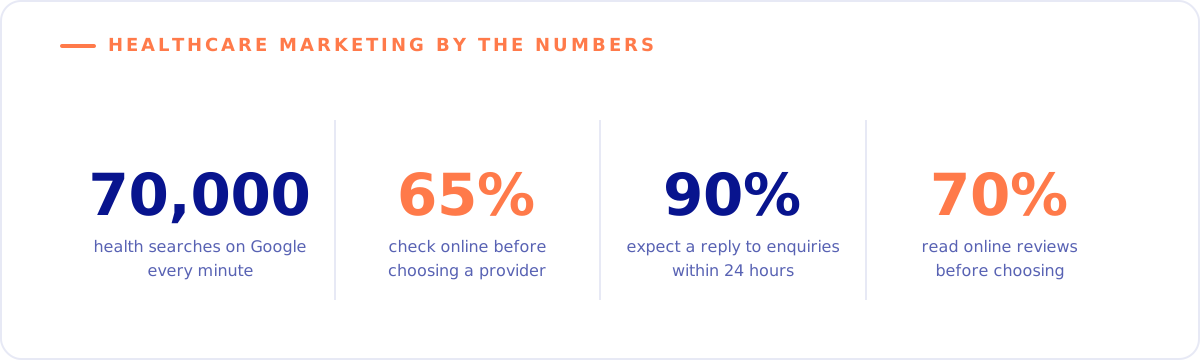
Around 70,000 health-related searches happen on Google every minute, while nearly 65% of patients check online before choosing a provider. In 2025, decisions about which healthcare provider to trust start online, and that’s where strong marketing makes all the difference.
In this article, we’ll outline the most important healthcare marketing trends right now, why they matter, and how to stay ahead of the competition.
Staying Ahead in Healthcare Marketing
Healthcare marketing moves quickly and comes with unique challenges. The field is fast-paced and driven by ongoing advancements in technology (e.g. telehealth, AI, wearable devices) and by patients with more choices than ever before.
Marketing teams now operate in an environment where over 90% of patients expect a response to online enquiries within 24 hours. Meanwhile, more than 70% of patients read online reviews before choosing a provider. Healthcare organisations are reacting: roughly 80% of businesses in the healthcare industry plan to use their websites and SEO to support marketing campaigns.
These trends require healthcare organisations to be proactive and agile in the face of changing technology, rising consumer expectations, and a competitive landscape where visibility directly affects patient acquisition.
However, in a sector with strict compliance rules, sensitive subject matter, and longer decision cycles involving multiple stakeholders, it’s not enough to run a generic campaign.
Trust and credibility are fundamental in healthcare marketing. Messaging must be medically accurate, empathetic, and respectful of the patient’s situation. There’s also a need to educate patients on complex medical topics, address misinformation, and support decision-making without overwhelming them.
Many marketing directors, particularly those used to traditional channels, now find themselves needing digital expertise they don’t have in-house. With limited time and tight budgets, the ability to plan, launch and measure digital campaigns efficiently is critical.
For healthcare organisations to compete and grow in 2025, marketing must be more than reactive. Let’s look at where the biggest impacts are coming from right now.
1. The Rise of Patient-Centric Marketing
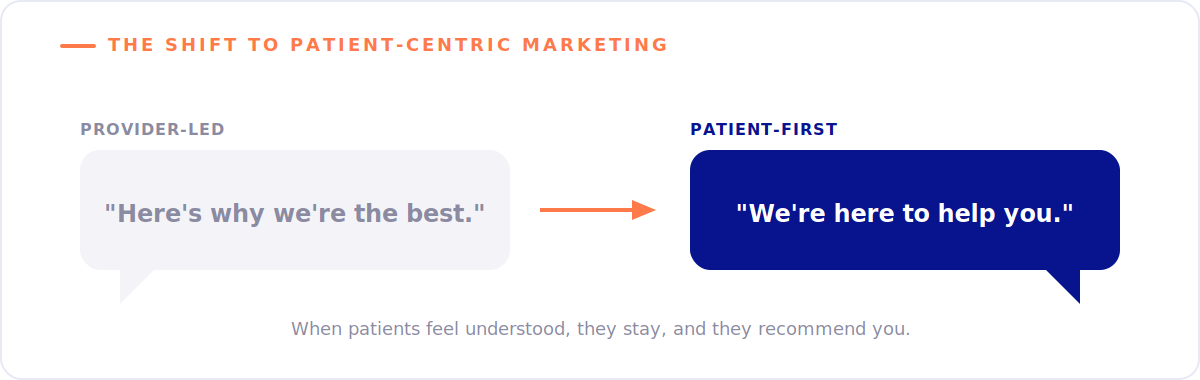
Healthcare marketing is moving decisively from broad campaigns to more personalised, patient-led strategies. Patients expect healthcare providers to understand their needs and address their concerns directly. Leading healthcare brands are changing their tone from “Here’s why we’re the best” to “We’re here to help you.”
Personalisation builds trust. It also improves results. Campaigns that target specific patient groups based on symptoms, life stage, or past engagement (within privacy limits) tend to see higher response rates. A well-timed follow-up email or a condition-specific blog post can guide someone from research to action.
Empathetic messaging is central to this approach, especially by acknowledging a patient’s pain points—long wait times, unclear treatment options, or the stress of navigating care. A byproduct of this trend is greater patient loyalty: when patients feel understood and valued, they’re more likely to stay with a provider and offer word-of-mouth recommendations.
Explore how Healthcare Marketing can develop patient-first strategies centred around your practice.
2. AI and Automation in Healthcare Marketing
AI-powered tools are helping healthcare marketers do more with less. Chatbots and automated messaging systems can help improve the patient experience by responding to questions in real time, even outside of office hours. These tools free up healthcare professionals, allowing teams to focus on care while also capturing useful patient data for follow-up.
Beyond chat, AI and machine learning are improving email marketing and CRM workflows. They’re used to analyse vast amounts of patient data and help providers tailor their marketing efforts more precisely. For instance, sending out educational blog posts, service suggestions, or updates tailored to the recipient’s history or interests.
Predictive analytics can also identify which patients might be most at risk or likely to need certain care. This allows for timely outreach that feels relevant rather than intrusive.
The healthcare sector has embraced this trend enthusiastically: organisations in healthcare and life sciences have significantly more AI models in deployment than those in other industries, with 93% planning to increase AI investments in 2025.
3. Emphasis on Local SEO for Healthcare Practices
Local search visibility is becoming a make-or-break factor for healthcare providers as more patients rely on search engines to find nearby services. The prevalence of terms like “dentist near me” or “walk-in clinic [city]” means that providers must compete to appear at the top of local search results. Google itself has shown that 76% of consumers who search “near me” visit a business within a day.
Accurate and optimised local listings increase the chances of appearing in these results. Google Business Profiles, directory entries, and consistent NAP (name, address, phone number) details all help.
So do positive patient reviews. Encouraging patients to write positive reviews can be a great step toward climbing the ranks to appear in a top-three position – the three results shown at the top of local search listings, often referred to as the “local pack.”
To further improve rankings:
- Focus on location-based keywords
- Create a fast-loading, mobile-friendly website
- Optimise page titles and meta descriptions
- Embed maps on your contact page
- Use schema markup for healthcare services
- Build local backlinks from trusted directories and community organisations
4. Educational Content as a Marketing Tool
Patients often actively research symptoms, conditions, and treatment options before consulting a healthcare provider. This creates a clear opportunity: meet them with accurate, expert-backed content during that search.
Blog posts, videos, explainers, and infographics help answer common questions and reduce uncertainty. Importantly, they position the organisation as a trusted source of health information.
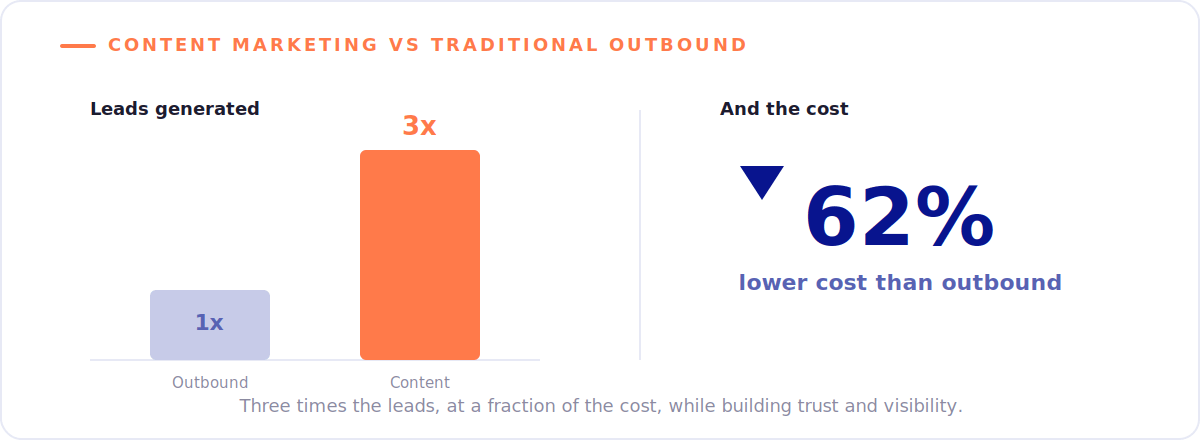
This builds visibility, too. Search engines reward content that is useful, relevant, and frequently updated. Content marketing generates three times more leads than traditional outbound marketing, while costing 62% less. It also increases dwell time on websites, leading to more organic exploration of the services on offer.
Good educational content doesn’t overwhelm. It should be clear, specific, and written in a tone that is respectful and easy to follow. Over time, well-developed content will convert to more queries and a better reputation.
5. Visual Storytelling in Healthcare Marketing
In an age dominated by social media, visual storytelling can be an excellent way for healthcare brands to improve patient engagement. They help humanise care, show real outcomes, and make information easier to absorb.
Human-centric storytelling is a great lever. A short video of a patient sharing their recovery, a behind-the-scenes look at a clinic, or a quick explainer video of a certain medical process is much more compelling and emotionally resonant than dry facts or text alone.
Short-form video is especially effective. Social media platforms like Instagram, YouTube, and TikTok can be a ticket to massive visibility when marketers tap into what viewers want: engaging clips with an authentic feel that educate or entertain.
The stats are clear. Video now accounts for around 82% of all internet traffic, and 57% of consumers state that a medical facility’s social media presence would strongly influence their choice of where to go for services.
This trend is also practical. Many people prefer to watch rather than read. A one-minute video showing how to prepare for an outpatient procedure or what to expect during a scan can reduce anxiety and smooth the patient experience.
6. Data Privacy and Compliance in Healthcare Marketing
Patients are more conscious of how their data is used than ever before. They expect secure systems and clear communication about what’s being collected and why.
In healthcare, compliance isn’t optional. All marketing activity must meet GDPR (or HIPAA) standards when personal health information is involved. That includes email campaigns, retargeting, CRMs, and website analytics.
Providers need to be transparent. Patients should know when and how their data is being used. Consent should be clear and easily understood.
However, done well, privacy-focused marketing can be an asset. It builds trust when patients know their sensitive medical data is safeguarded through clear privacy policies. It also protects providers from reputational and legal risk.
7. Multi-Channel Marketing for Maximum Reach
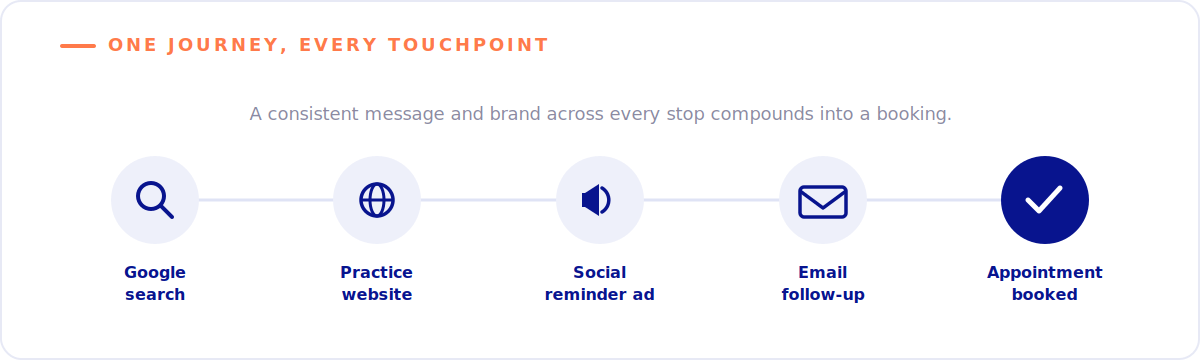
Gone are the days when a healthcare practice could rely on a single marketing channel. Today’s patients are everywhere: searching on Google, scrolling social media, checking email newsletters, and so on. To maximise reach and impact, healthcare marketers are adopting multi-channel marketing strategies that create a cohesive presence across all these touchpoints.
The modern patient journey can span any number of digital and offline stops, so a unified approach is key to staying visible and persuasive throughout that journey.
Patients may find a clinic through a Google search, explore services on the website, see a reminder ad on Facebook, and finally complete the process by scheduling appointments via email or a booking tool. If all those interactions carry a consistent message/branding and funnel patients towards the same goal (be it booking a visit, downloading a guide, etc.), the cumulative effect is powerful.
Analytics plays an essential role here. Tracking which channels drive traffic, leads, and conversions can help marketers identify the most effective platforms for specific segments, with spending and budgets adjusted accordingly.
8. Reputation Management and the Power of Reviews
In healthcare, perhaps more than any other field, reputation is everything. Patients need to trust their providers, and one of the first things they do when evaluating any medical service is read online reviews.
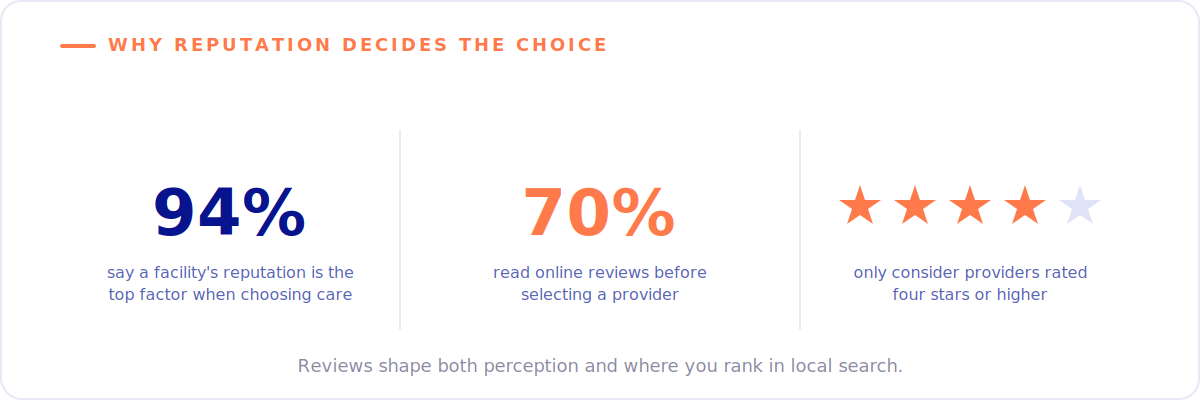
Over 70% of patients read online reviews before selecting a healthcare provider, and roughly the same amount will only consider those with four-star ratings or higher. Ninety-four percent of all potential patients say the reputation of a facility is the most important factor in choosing a healthcare practitioner.
Beyond perception, positive reviews improve visibility. Google and other search engines factor reviews into local ranking. That means strong ratings help patients find you more easily.
For these reasons, healthcare marketers in 2025 are heavily focused on reputation management: monitoring reviews across platforms, responding promptly and professionally to patient feedback, and encouraging satisfied patients to share their experiences.
When addressing a critical review, a thoughtful response that’s respectful of confidentiality can actually boost reputation, whether by showing gratitude or a commitment to improvement. Moreover, staying on top of reviews can highlight service issues or common patient concerns, which can guide practical improvements beyond marketing.
9. Balancing Capacity and Efficiency
One of the less visible healthcare marketing trends is aligning marketing with operational reality. If demand outpaces availability, patients wait too long and begin to look elsewhere.
Smart marketing accounts for this. Before launching a campaign, teams check appointment availability, staff levels, and location-specific data. They promote services where slots are available, and scale back where the waiting list is growing.
This requires close coordination between marketing and operations, but when successful, it can avoid wasted spend and protect the patient experience. Some providers now adjust ad budgets in real time based on daily availability, using shared dashboards or regular team updates.
Balancing demand means that new patients are seen quickly, staff aren’t overworked, and reputation is maintained, all while achieving a higher ROI from more efficient marketing.
Embrace the future: How KD Web can help you lead healthcare marketing trends
Staying on top of healthcare marketing trends in 2025 demands precision, speed, and proactiveness. The strongest healthcare marketing strategies focus on patient needs, use AI and automation to improve delivery, and build visibility through local SEO, content, and reviews. Data privacy, cross-channel coordination, and operational alignment are no longer optional but expected.
Understanding these trends is a first step. Acting on them is what delivers results.
Now is the time to review your current strategy. Look at what’s working, where gaps exist, and how your team can better meet patient expectations.
KD Web helps healthcare organisations do exactly that. With nearly 30 years of experience and a full-stack digital service offering, we can create or update your healthcare marketing strategy using proven, compliant, and patient-first methods that deliver measurable outcomes.
We build strategies that work. Contact KD Web to get a custom-built, data-led strategy designed for today’s healthcare market.