
Why Your Healthcare Content Isn’t Converting Patients (And What Actually Works)
Good healthcare converts anxious patients into confident ones. But getting there requires a fundamentally different approach than content written for most other industries.
We sat down with Tijana Vulić, KD Web’s Content Manager, to discuss what makes healthcare content writing unique and where most practices get it wrong. With over six years of experience working with medical and dental specialists, Tijana has seen firsthand what separates content that builds trust from content that undermines it. Her perspective is practical: healthcare content serves patients at their most vulnerable, and every word matters.

Why Healthcare Content Is Nothing Like Other Industries
Healthcare content operates under different rules because patient intent is fundamentally different. “Most potential patients searching online fall into two groups,” Tijana explains. The first group sits at the top of the funnel, trying to understand a symptom or condition. They want reliable information. The second group is at the bottom, often searching during moments of stress or uncertainty. They need help now, and they’re close to booking.
This behaviour doesn’t exist in most industries. “Healthcare searches often have real-life consequences,” Tijana notes.
Someone reading the content might be dealing with anxiety, pain, or uncertainty about their health.
The reader is worried, perhaps frightened, and seeking clarity in a moment when clarity feels scarce. That context demands a specific approach. Healthcare content must balance three things simultaneously: clear information, empathy for the reader’s experience, and professional authority.
This is where credibility becomes non-negotiable. Patients need to trust that the information they’re reading is accurate and responsible. Often, a patient’s first interaction with a clinic is through its website or educational content. “That means credibility has to be communicated even before the patient speaks with a professional,” Tijana points out. If the content feels unreliable, exaggerated, or unclear, the reader will lose trust and continue searching elsewhere.
Write for Your Patients, Not Medical Journals
Most healthcare websites make the same mistake: they write as if patients are medical professionals.
“Content should communicate complex topics in clear, accessible language,” Tijana explains. “The tone needs to stay professional, but the writing should avoid unnecessary jargon.” If someone unfamiliar with the condition can’t understand what it is, what causes it, what the symptoms are, or when to seek help, the content isn’t serving them.
This is particularly important in urgent situations where readers may be quickly scanning the page, most of whom do. Tijana recommends organising content in a clear progression:
- Define the condition in plain language
- Explain causes and risk factors
- List recognisable symptoms
- Clarify when to see a specialist
- Outline realistic treatment options
- Provide a clear next step (booking, consultation, contact)
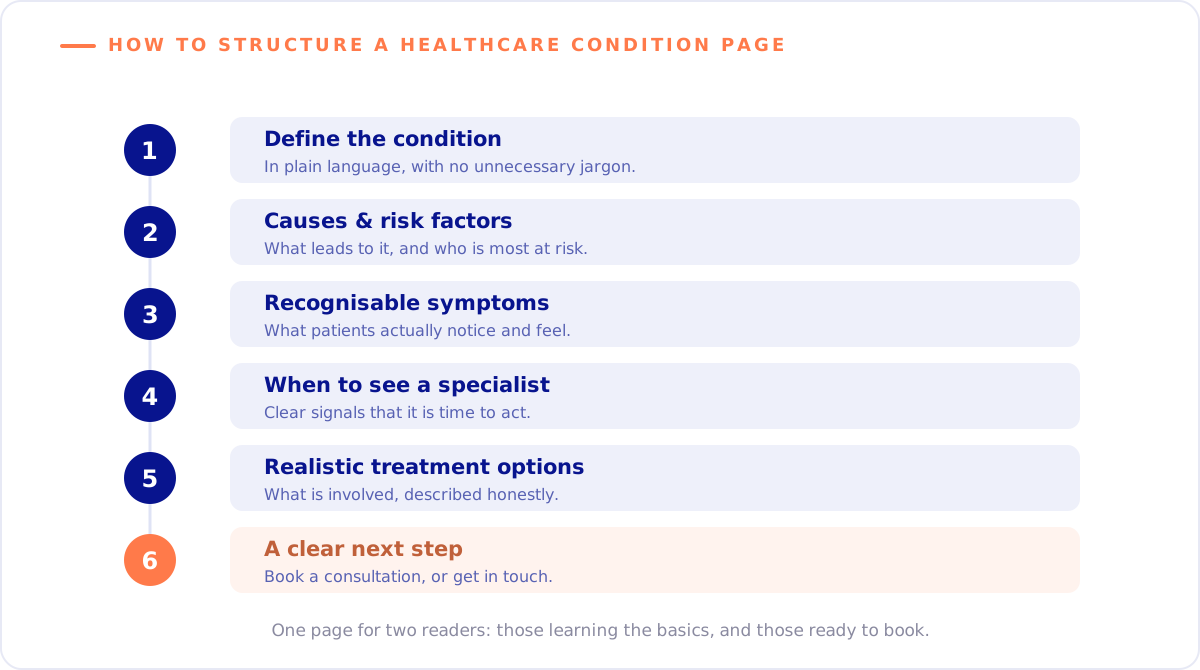
This format serves two audiences: those who need a foundational understanding and those who already know their symptoms and just want to know where to go. Your content should accommodate both without forcing either to wade through irrelevant information.
Accuracy Builds Trust, But It Also Builds Rankings
Trust is central to healthcare marketing, but Tijana emphasises a point that often gets overlooked: it’s not only patients who evaluate credibility. Search engines do too.
“From a user perspective, accurate information helps patients feel confident that they are learning from a reliable source,” she explains. “From an SEO perspective, search engines also evaluate credibility signals when determining rankings.”
The most effective way to strengthen credibility is by referencing reputable sources: government health organisations, academic institutions, peer-reviewed medical journals, and recognised healthcare authorities. “Users often click these references to verify information,” Tijana notes, “and search engines treat links to authoritative sources as a positive signal of reliability.”
Staying Relevant
But citing sources once isn’t enough. “Healthcare information evolves,” Tijana says. “Content should be regularly reviewed to ensure it’s current.” Depending on your medical speciality, content should be audited every six months or at a minimum, annually.
Most practices fail here. Content gets published, performs well initially, then sits untouched for years. Treatment guidelines change. New research emerges. If your content doesn’t reflect those updates, it becomes a liability. Patients lose trust when they find outdated information, and search engines demote content that’s no longer accurate.
Google’s E-E-A-T and YMYL matter for your practice. Google explicitly evaluates healthcare content (Your Money or Your Life topics) for Experience, Expertise, Authoritativeness, and Trustworthiness. Content that demonstrates real medical expertise, cites credible sources, stays current, and identifies qualified authors ranks higher. This directly affects whether patients find you when they search for specialists in your area.
Your Content Needs to Reassure, Not Just Inform

Patients reading your content are often worried or frightened. Your content needs to acknowledge that reality without losing professional credibility.
This balance matters. Too empathetic, and the content feels unprofessional. Too clinical and you alienate patients looking for reassurance as much as information.
Tijana recommends focusing on the patient’s experience and concerns rather than the clinic. “Even though the content may describe services offered by the practice, it should always be written from the perspective of helping the reader understand and manage their situation.”
Content that centres your practice (“We offer the most advanced treatment,” “Our team has extensive experience”) positions you as the subject. Content that centres the patient (“If you’re experiencing these symptoms, here’s what you need to know,” “Understanding your options helps you make an informed decision”) positions them as the subject. The latter builds trust because it demonstrates you understand what they’re going through.
Use Patient Stories Strategically
Testimonials and case examples, when used correctly, help prospective patients relate to real experiences and see how treatment helps people in similar situations.
The key is ensuring these stories have a clear purpose: building trust, providing reassurance, or demonstrating realistic outcomes.
A testimonial, “Dr Smith changed my life”, tells prospective patients nothing useful. Another approach, “I was terrified before my procedure, but the team explained every step, and recovery was easier than I expected”, addresses specific concerns: fear, uncertainty about the process, and recovery expectations. That’s the difference between generic praise and content that actually moves anxious patients toward booking.
The Content Mistakes Costing You Consultations
Tijana has seen enough healthcare content to recognise patterns in what doesn’t work. These are the mistakes that damage credibility, undermine trust, and ultimately cost practices patients.
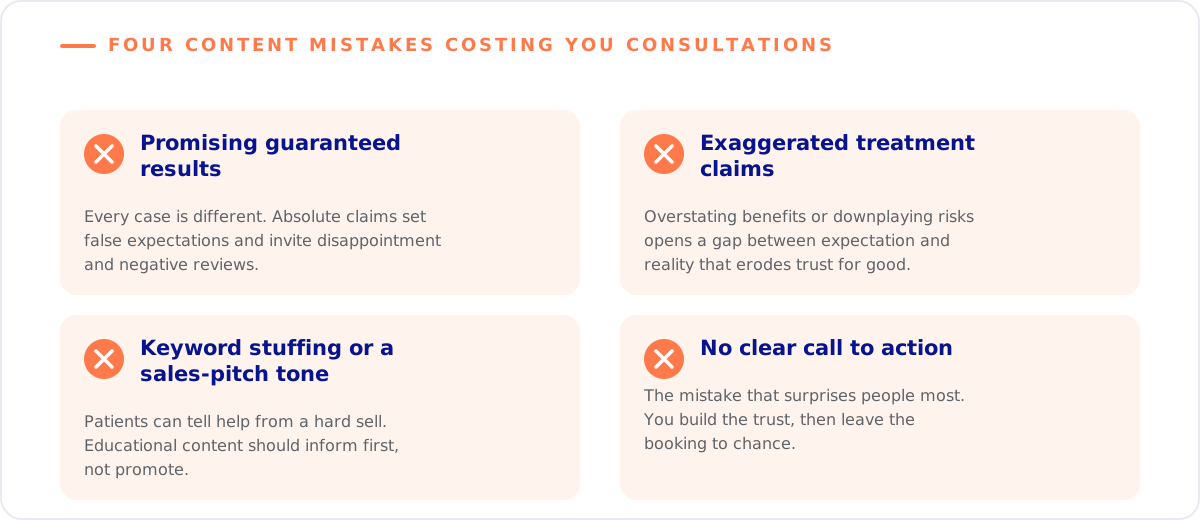
Promising Outcomes Or Guaranteed Results
“In healthcare, every patient case is different,” Tijana says. “Making absolute claims damages trust and creates unrealistic expectations.” Content promising “complete relief” or “guaranteed results” sets patients up for disappointment and raises questions about your integrity. If your content overpromises, patient dissatisfaction follows, along with negative reviews and lost referrals.
Exaggerated Claims About Treatments
Similar to the above, but worth addressing separately. Overstating the benefits of a treatment, downplaying risks, or suggesting that a procedure is simpler or faster than it is in reality creates a gap between patient expectations and reality. That gap erodes trust, often permanently.
Keyword Stuffing Or Overly Promotional Writing
“While service pages may include some promotional elements,” Tijana explains, “educational content like blog posts should focus primarily on delivering valuable information to the reader.” Content that feels like a sales pitch undermines its own purpose. Patients can distinguish between content designed to help them and content designed to sell to them.
Forgetting To Include Clear Calls To Action
This is the mistake that surprises people most, because it seems so obvious.
“Not every patient converts immediately,” Tijana acknowledges, “but some are ready for the next step. If your content builds trust and answers questions but doesn’t clearly tell them how to book, you’ve lost an opportunity.” A simple CTA (“Book a consultation to discuss your options” or “Contact us to learn more about treatment”) gives ready patients a clear path. Without it, you’ve built trust but left conversion to chance.
Where to Start
You don’t need to become a content expert. But you do need to recognise that content is often the first interaction a patient has with your practice. If it feels trustworthy, professional, and genuinely helpful, that trust carries into the consultation. If it doesn’t, no amount of clinical expertise recovers the opportunity you’ve lost.
At KD Web, we treat healthcare content with the responsibility it deserves. If you’re ready to build content that serves patients and converts them into consultations, let’s talk.