
Digital Marketing Strategies for Healthcare: What Works, What Wastes Budget (UK 2026)
Healthcare providers keep hitting the same wall: plenty of digital activity and plenty of traffic, but not enough of it turning into booked appointments. The fix is rarely more activity. What changes the outcome is a clearer strategy: one built around how patients find care now, and the rules governing how you can market to them.
This guide walks through where to focus, what converts, and how to measure it, with the healthcare-specific detail most general advice leaves out.
How Patients Find Healthcare Providers Now
The biggest shift is where the search begins. A growing share of patients now start with AI, not search engines.
The practical response is to become the source it draws from. AI answers and ordinary search pull from the same well-structured, credible websites. In practice, that means:
- Lead with the patient’s actual question on your web pages, and answer it in the first two or three sentences.
- Show who stands behind it: a named clinician as author or reviewer, their credentials, and a review date.
- Link to the evidence, and mark up the page with relevant schema (such as MedicalCondition, FAQPage, or Physician) so platforms can read it.
Get this right and the same page earns visibility whether a patient is on Google, asking ChatGPT, or using Perplexity. This is the foundation of strong AI search visibility.
Which Digital Marketing Channels to Prioritise
The most strategic decision in healthcare marketing is which channel deserves your attention right now, given your goals, because each does a different job.
Paid search buys visibility immediately. It suits high-intent, treatment-specific searches, and it earns its keep when the campaign matches the user’s intent. Start here when you have capacity to fill or a new service to launch and cannot wait months. Well-run PPC Advertising is the fastest way to test real demand.
Content and Organic Search build the same visibility, but the results last. They take longer to show, but over time they keep your practice appearing in map results and in the AI answers. This is where SEO Marketing pays back over time, and it is usually the channel to expand once paid search has shown you what converts.
Email is the cheapest and most neglected channel. Appointment reminders that cut no-shows, post-treatment follow-ups, and recall campaigns retain existing patients at a fraction of the cost of winning new ones.
| Channel | Best for | When to prioritise |
| Paid search | Immediate, high-intent demand | Filling capacity or launching a service now |
| Content and local search | Durable visibility in search, maps and AI answers | Expanding once paid search shows what converts |
| Retaining and reactivating existing patients | Once you are already winning new enquiries |
What Turns Website Visitors Into Patients
Once a patient reaches you, a few things decide whether they book.
Your website must load quickly, make the next step obvious with a visible phone number, a short form, and a callback option, and put trust signals where they are seen first: clinician credentials, professional-body membership, and, if you are a rated provider, your CQC rating. Ask only for what you need on that first form, since long forms get abandoned. Intentional medical web design does most of this quietly.
Conversion checklist
What turns a healthcare website visitor into a patient
- ✓ A fast-loading site. Slow pages lose visitors before they ever see your next step.
- ✓ An obvious next step, with a visible phone number, a short form, and a callback option.
- ✓ Trust signals where they are seen first: clinician credentials, professional-body membership, and your CQC rating if you are a rated provider.
- ✓ A short first form. Ask only for what you need, since long forms get abandoned.
- ✓ Everything above the fold, so the phone number, form and trust signals are visible without scrolling.
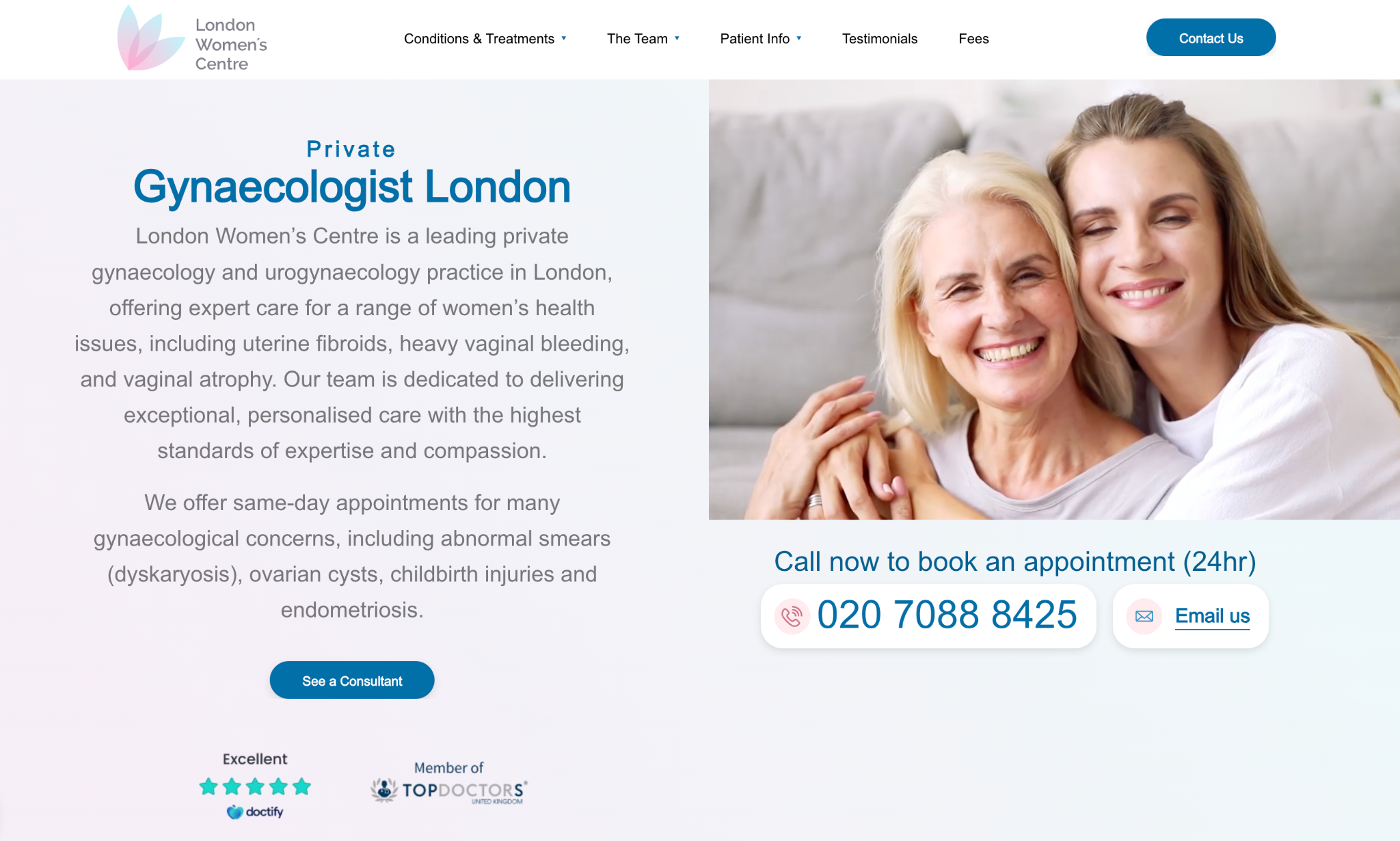
KD Web built a site for London Women’s Clinic, with the phone number, a short form and trust signals kept above the fold.
The Rules That Shape Healthcare Marketing
UK Healthcare Advertising Compliance directly affects what your marketing can do.
Prescription-only medicines cannot be advertised to the public, which reshapes how cosmetic-injectable, weight-loss and similar clinics market, since you can promote the consultation but not name the drug or show before-and-after results.
Rated providers must display their current CQC rating on their website. Email marketing also needs explicit opt-in under UK GDPR and PECR, so a pre-ticked box will not do.
Measuring Your Marketing and Cutting Wasted Budget
Everything above is only accountable if you measure it properly, and healthcare makes that harder than most, because journeys are long and many bookings still happen by phone.
Track conversions in GA4 for each form, call, and booking; tag your campaigns with UTMs; and add call tracking so you attribute phone bookings rather than losing them. Getting this right usually needs proper analytics and call tracking from the start.
Once you can see the truth, the common leaks are obvious and avoidable:
- Sending paid traffic to wrong pages instead of a page that matches the ad
- Chasing rankings for informational terms that rarely book, while neglecting the treatment-intent searches that do.
- Running claims that breach the CAP Code
- No call tracking, so phone bookings are invisible and the channels that actually work look like they do not.
- Buying or gating reviews, which breaches the guidelines and, once noticed, costs more trust than it ever bought.
Building a Strategy That Works
Healthcare marketing wastes money when it treats the sector like any other. It works when it starts from how patients search now, respects the rules others treat as optional, and measures the outcomes that matter. Be findable in the answers patients increasingly trust, be openly compliant where competitors stay vague, and let the results guide the spend. The tactics only pay off on top of that foundation.
If you would like a hand putting this into practice, our team can help you see where yours stands today and what to prioritise. Book a free growth audit to get started.