
A Practical Guide to Pay-Per-Click (PPC) for Healthcare
Most healthcare practices approach PPC backwards. They turn on ads, watch spend climb, and wonder why enquiries aren’t converting into booked patients. The problem isn’t the platform. It’s that PPC for healthcare operates under entirely different rules than PPC for ecommerce or lead-gen services, and most clinics don’t realise this until they’ve already burned through their budget.
This guide breaks down how PPC actually works for clinics, what makes healthcare campaigns different, and how to structure campaigns that generate qualified enquiries rather than expensive traffic that goes nowhere.

How PPC Works for Clinics
For most private clinics, PPC is the primary scalable demand-capture channel. It reaches patients at the exact moment they’re actively searching for solutions: “private GP near me,” “same-day MRI,” “rhinoplasty consultation London.” They’re people with intent, often urgency, looking for a provider who can help them now.
PPC works best alongside SEO, which builds long-term volume and trust; referrals, which convert well but can’t be scaled on demand; and brand reputation, which PPC amplifies but can’t replace. PPC’s role is to capture demand when it exists and move patients toward booking.
How clinic PPC differs from ecommerce and other services
Clinic PPC operates under very different conditions. Conversion paths are multi-step: enquiry, consultation, and then treatment. And the platforms you advertise on often have regulations and policies that limit what you can advertise and the terminology you use. Google won’t let you promise specific outcomes or make certain claims. That constraint shapes how you write ads and structure campaigns.
Success in clinic PPC is measured by qualified enquiries that convert into real patients, not by traffic or sessions. That’s where Healthcare SEO comes in. PPC and SEO go hand in hand: SEO builds volume over time, PPC captures immediate demand.
Which clinics benefit most (and least)
PPC works best for clinics offering high-margin treatments, clear procedures with predictable patient journeys, and services with existing demand. Cosmetic procedures, diagnostics, specialist consultations, and private GP services all perform well.
It struggles for low-margin, one-off services with thin economics; vague offerings with no clear differentiation; and clinics that can’t operationally handle enquiries well. If your reception team can’t answer calls promptly or your booking process creates friction, PPC will expose that weakness immediately.
How quickly should you expect results
First enquiries can appear within days. Reliable performance signals emerge within 4–6 weeks, assuming sufficient budget and correct tracking. For high-consideration treatments, procedures may take weeks or months to close. Early success should be judged by the quality of enquiry, not by immediate revenue.
Remember, PPC isn’t a switch you turn on to “get patients.” PPC exposes weak websites, poor reviews, slow call handling, and unclear positioning. If those fundamentals aren’t solid, PPC won’t save you. It will just cost you money faster.
Intent Mapping and Keyword Strategy
High-intent healthcare keywords usually combine a specific treatment, a location, or a signal of urgency or readiness. Examples include “private dermatologist London,” “same-day MRI,” or “rhinoplasty consultation cost.” The goal is to identify commercial-intent keywords that your services can satisfy and indicate a patient is ready to book.
Informational searches (“what is physiotherapy,” “is rhinoplasty safe”) are research-oriented. These keywords are better served by SEO. For PPC, you want booking-driven searches: “book private physio,” “rhinoplasty consultation London.” These indicate action, not exploration.
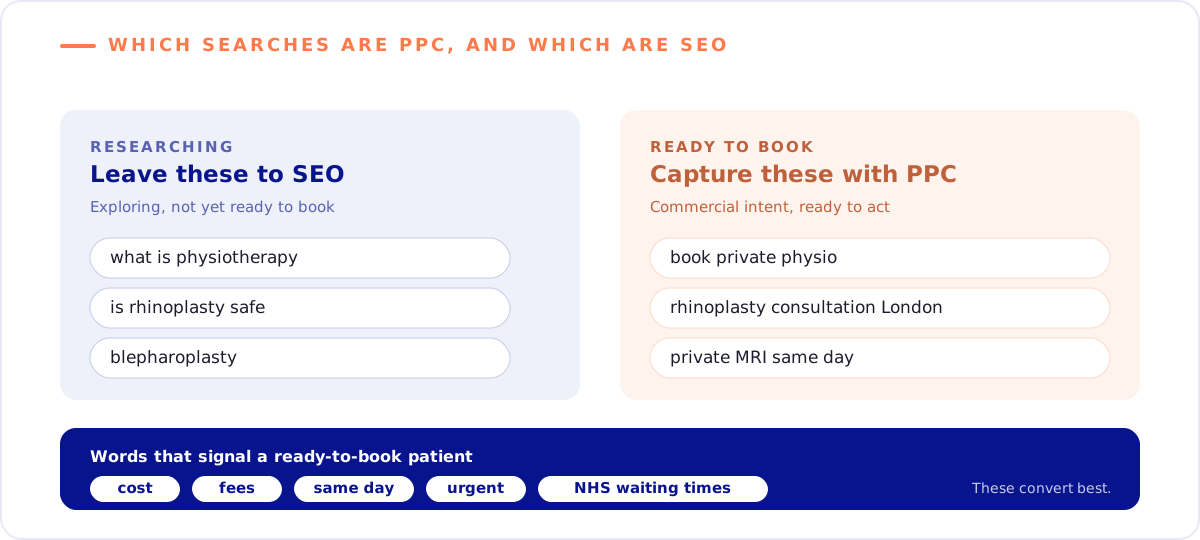
Keywords containing “cost,” “fees,” “same day,” “urgent,” or referencing NHS waiting times often convert better because they signal readiness. A patient searching “private MRI same day” is ready to pay for swift service.
Broad, high-volume terms are expensive and unfocused. Long-tail, specific combinations generate fewer clicks but dramatically higher-quality enquiries. Most clinics underestimate how much of their revenue comes from these smaller, sharper queries. Someone searching “blepharoplasty London under £5000” is far more likely to convert than someone searching “blepharoplasty.”
The most expensive mistake is using broad match configuration on generic medical terms without strict negatives. Another is ignoring branded and competitor searches, which are often among the most cost-effective sources of traffic. If patients are searching for your clinic name or your competitors, you should be there.
What Does A Well-structured Account Look Like?
A good PPC structure mirrors how the clinic actually makes money. Campaigns should be separated by major treatment categories, economics and margins, and sometimes location or urgency. Ad groups then reflect specific treatments and intent.
Treatments with different price points, conversion rates, or capacity constraints should never compete for budget inside the same campaign. A £200 consultation and a £10,000 procedure have entirely different economics. Mixing them dilutes performance and makes optimisation impossible.
What should you track from day one
At minimum: phone calls, enquiry and booking forms, online bookings, and key pre-booking actions. Start with solid enquiry tracking, then layer in more nuanced data such as lead quality, revenue, and the number of treatments booked. If you’re not tracking properly, work with GA4 & Google Tag Manager specialists to get it right from the start.
How to Avoid Wasted Spend
Waste usually comes from generic keywords with weak intent, overly broad geographic targeting, running ads when the clinic can’t answer calls, and continuing to fund treatments that don’t make financial sense. Each of these is preventable with proper structure and regular review.
The role of negative keywords
Negative keywords are not a one-off task. They’re an ongoing task, especially in the first few months. Negative keywords are words or phrases you add to prevent your ads from showing for irrelevant searches. For example, if you offer private care, you’ll want to exclude searches for “NHS,” “free,” or “how to become a dermatologist.”
Handling low-margin or poor-converting treatments
Not every service deserves scale. PPC does not guarantee leads. If a treatment consistently generates enquiries that don’t convert or attract the wrong patients, you have options: strict geo-targeting to limit exposure, capped budgets to control spend, or brand-only coverage to maintain presence without aggressive investment.
Early warning signs of waste
Rising spend without improvement in enquiry quality, many leads asking for NHS or free care, and reception teams reporting poor-fit enquiries. When this happens, the issue is usually targeting or messaging, not “Google.” Fix the input, and the output improves.

Analysing PPC Performance
For clinic owners, the metrics that matter are cost per qualified enquiry, cost per booked patient, revenue per patient, and profit by treatment line. Vanity metrics like impressions or clicks tell you nothing about whether PPC is working for your business.
- Interpreting metrics together: A high click-through rate (CTR) with low conversion usually signals a mismatch between promise and reality. Your ad is attracting clicks, but your landing page or service isn’t delivering what patients expected. Lower CTR with strong conversion is often healthier, especially for high-value treatments. You’re attracting fewer people, but the right people.
- “Good” ROI: There is no universal benchmark. Acceptable cost per lead (CPL) and ROI depend entirely on treatment value, conversion rates, and operational capacity. A £50 CPL might be excellent for a £10,000 procedure and disastrous for a £150 consultation. Context matters.
- Review cadence: Weekly reviews for hygiene and signals. Monthly or quarterly reviews for strategic decisions. Regular reviews help keep spending efficient and identify problems before they compound.
Should Clinics Manage PPC In-House?
Effective PPC management requires platform expertise, tracking literacy, commercial judgement, and understanding of clinic operations. In-house PPC usually makes sense once the spend and complexity justify a dedicated specialist with time to think, test, and optimise.
Common risks of in-house management include compliance issues (violating platform policies regarding medical claims), silent budget waste (spending without realising that performance has deteriorated), and a lack of connection between marketing and actual bookings. Set-and-forget PPC is one of the most expensive mistakes clinics make. It will drain your budget before you even know it.
How to assess agencies or freelancers
Good partners explain decisions clearly, break performance down by treatment, and align with capacity and clinical priorities. Reports without insight are noise. The best PPC relationships integrate marketing with operations. If you’re evaluating agencies, look for experience specifically in healthcare. A PPC agency London with healthcare clients will understand the regulations, patient behaviour, and tracking requirements that general agencies often miss.
The First 90 Days From Scratch
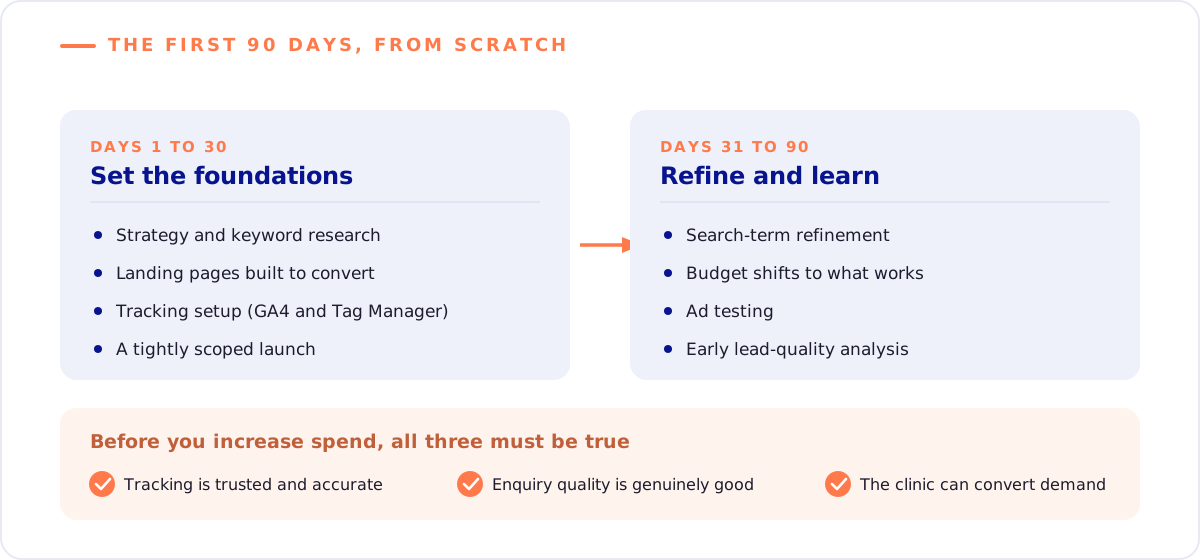
Before increasing spend, three things must be true: tracking must be trusted and accurate, enquiry quality must be acceptable and driving genuine leads, and the clinic must be able to convert demand operationally. Scaling broken campaigns just wastes money faster.
PPC data should inform SEO priorities, website copy, FAQs and objection handling, and CRM workflows. It’s one of the fastest feedback loops clinics have. If patients are repeatedly asking the same questions or raising the same concerns, that’s content you should address proactively on your website. For practices looking to align PPC with broader SEO strategy, understanding healthcare SEO in the age of AI provides useful context on how these channels complement each other.
Sustainable PPC is predictable, measurable, and adjustable. You know what you’re spending, what you’re getting, and how to shift budget when priorities change. That’s the goal. Anything less is speculation.