
Why the Best Private Consultants Can Be Invisible Online (And How to Fix It)

With Professor Ben Turney, consultant urological surgeon and Managing Partner of Oxford Urology Associates.
After we finished the formal interview with Professor Ben Turney for our private clinic series, we kept talking. The recording was still running, but the structure had gone, and what followed was one of the most candid conversations about private practice we have had: what patients actually do before they book, whether digital authority can close the gap between how good a surgeon is and how easily a patient can find that out, and what the next decade looks like for consultants who want to grow.
Ben brings something rare to this. He is not a clinic founder who picked up marketing along the way. He is one of the UK’s leading urological surgeons, an Associate Professor at the University of Oxford, and someone who has spent twelve years building a successful multi-clinician practice from the ground up. His view on where clinical excellence meets commercial visibility is grounded, specific, and more honest than most.
The framework running through this piece, the three A’s of availability, affability and ability, is one Ben introduced himself. It is well known in private practice circles, and what he said about it opened up a conversation neither of us expected.
“The two that you can really market are availability and affability,” he said. “It is extremely difficult to judge people’s ability. And I think that is the real challenge in healthcare that has never been cracked.”
It is a striking thing to hear from someone at the top of his speciality. And it points to something that affects excellent consultants across the UK: the gap between clinical excellence and digital visibility is real, and it costs practices, patients they should be seeing.
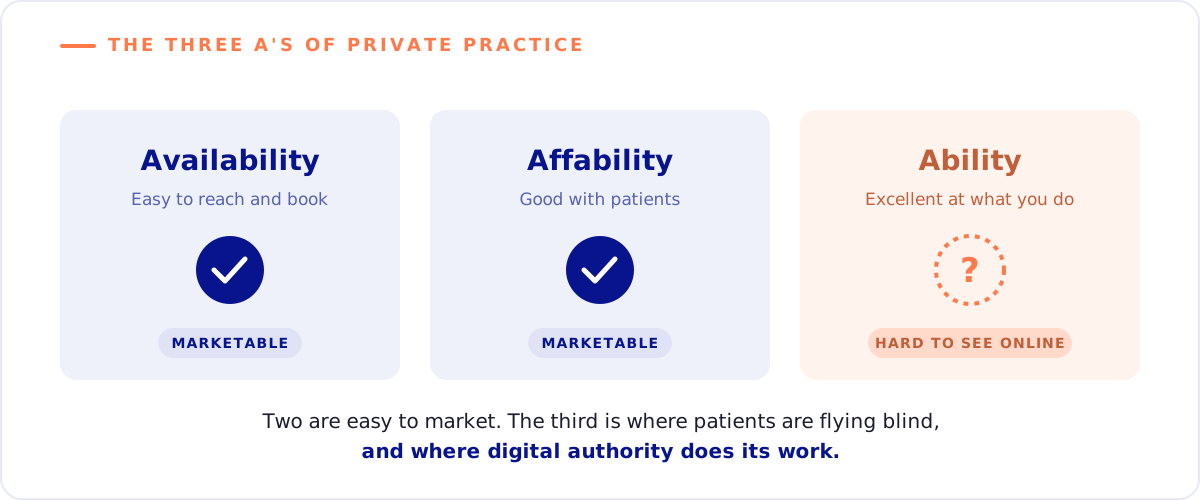
The three A’s of private practice, revisited
Each of the three A’s behaves very differently online.
- Availability is the easiest to solve and to measure. Can patients reach you and book easily? Oxford Urology Associates has had a staffed office from eight in the morning to four in the afternoon since launch, and patients can often be seen the same day. That came directly from the group model: with fifteen clinicians across multiple sites, someone is almost always available. The group solved availability structurally, not just operationally.
- Affability is the domain of Doctify, Google reviews and Trustpilot. These platforms are imperfect, as Ben acknowledged. “We are all scoring 4.85 to five out of five on everything,” he said. “And all the reviews say, yeah, really good guy, loved his bedside manner. But it is a self-selecting group. Usually, doctors only ask people who they think are going to write something nice about them.” The result measures warmth reliably, and clinical quality barely at all.
- Ability is where the system breaks down. Colleagues know who is excellent. Theatre staff know. Trainees know. But the patient searching for the best kidney stone surgeon in Oxford has no reliable way to reach that knowledge, so they default to proximity, price and name recognition. Harley Street wins on familiarity, London wins on brand, and a genuinely exceptional specialist elsewhere loses patients they should never have lost.
There could be someone who is a fantastic hip surgeon who works in Oxford, who does not have the sort of visibility, who is cheaper, but is as good or better than the Harley Street guy, but he is just not getting any business.
The question we explored is whether digital authority can start to close that gap. Not perfectly, but meaningfully, and in ways that matter commercially.
What patients actually do before they book
A patient making a high-stakes private healthcare decision does not just Google and book. They research, cross-reference, read and compare across several sources before they ever pick up the phone.
What they are looking for, even if they cannot name it, is evidence of ability. They cannot read your operative notes or speak to your trainees, but they can read a research publication, see an affiliation with a world-class university, find a device you helped develop or a treatment you introduced, and judge whether your website is the kind of resource a genuinely expert clinician would have built.
That research has shifted. For decisions this personal, people spend real time on it and lean on the sources they trust: Google first, YouTube second, and increasingly AI alongside social media. Which raises a more interesting question, one Ben pushed us toward: could AI eventually do what no rating platform has managed, and synthesise a meaningful signal about ability?
AI search is already attempting something close to it. When a patient asks an AI assistant who the best kidney stone specialist in their region is, the answer is assembled from everything publicly available: the website, the Doctify profile, the Google reviews, the publications referenced, and the institutional affiliations listed. It does not just return the most visible result; it tries to assemble the most authoritative one. (Doctify itself now openly positions its verified reviews and structured data as signals that generative AI tools draw on.)
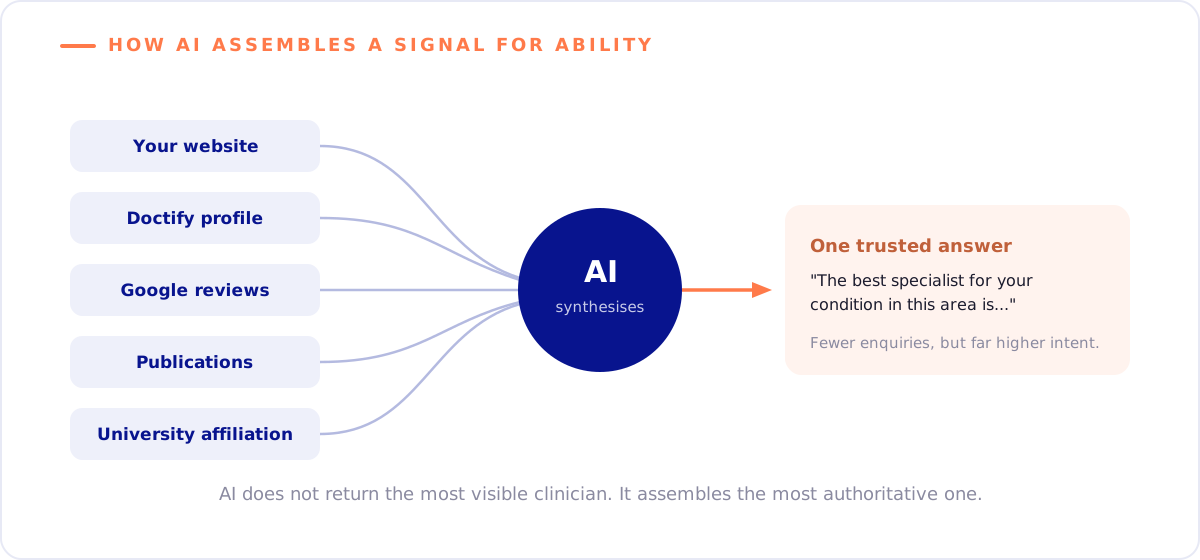
AI-driven enquiries are still fewer than people imagine, but they tend to convert at a much higher rate, because patients trust a synthesised answer deeply. The implication is significant: the consultants building comprehensive digital authority now are positioning themselves to win that channel as it grows.
The data sitting unused inside your practice
One of the sharpest things Ben said had nothing to do with marketing and came entirely unprompted.
If you have got an electronic system, there is a lot of data in there that we are currently just ignoring. We do not really track where our referrals are coming from, which we could do. We know where the patients live. We know where the GPs are who refer those patients. We have got a lot of information around that.
It is a self-aware observation, and it applies across the sector: the intelligence needed for better marketing decisions already exists inside most practice management systems. It just is not connected to anything. Most clinics, even well-run ones, operate with limited visibility into what actually drives their growth:
- Which marketing channel sent a particular patient
- Which GP is the most valuable referral source
- Which treatments generate the highest return on marketing investment
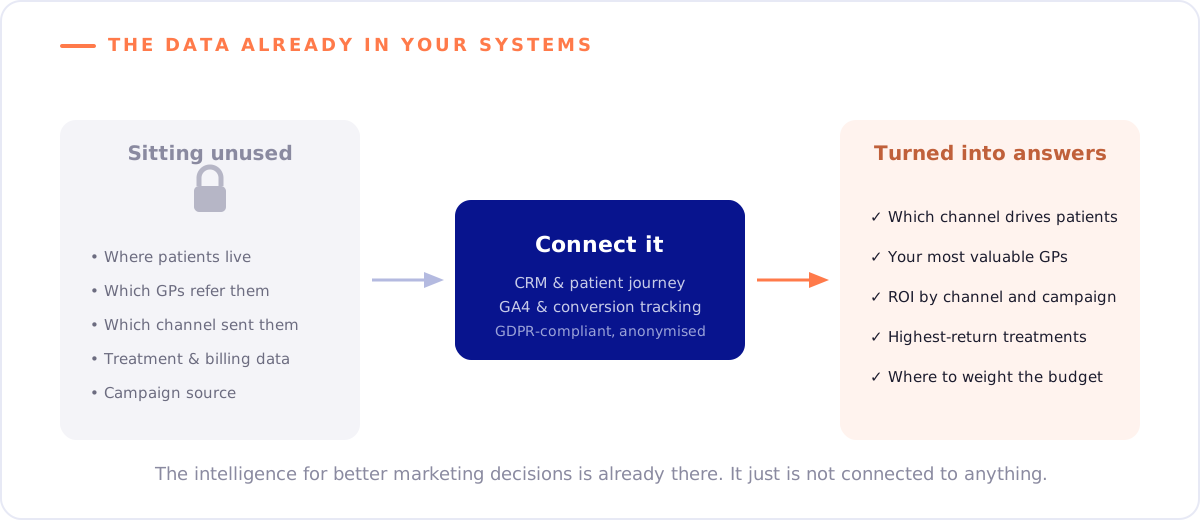
These questions have answers. Surfacing them is a matter of connecting the right systems: a properly configured CRM and patient journey, plus accurate GA4 and conversion tracking, all GDPR-compliant and anonymised. Done well, you can attribute revenue down to the individual channel and campaign, feed that back to the ad platforms, and see a real return on investment for paid media or SEO.
As Ben immediately recognised, once you know which treatments generate the highest return, you can weight your marketing accordingly. The data is there; it just needs unlocking.
We make the same case in our piece on why your practice management software is a marketing decision.
Owning the patient journey before a hospital takes it
Ben’s involvement with the new Welbeck hospital opening in Oxford gave us a useful lens on something that matters for any consultant working out of a hospital facility.
The challenge is simple. When patients search for private care and find a hospital brand rather than a consultant brand, the hospital controls the booking. It routes the patient through a central call centre, matches them to availability rather than subspecialty fit, and the consultant becomes a commodity within the hospital’s system rather than the reason the patient came at all.
“What we have always wanted to do is offer patients the fastest route to the person who can sort out their problem,” Ben explained. “These hospital routes are well-intentioned, but they just basically put people into a clinic with someone from that speciality. They might book you for a urologist, but they might book you for the wrong type of urologist.”
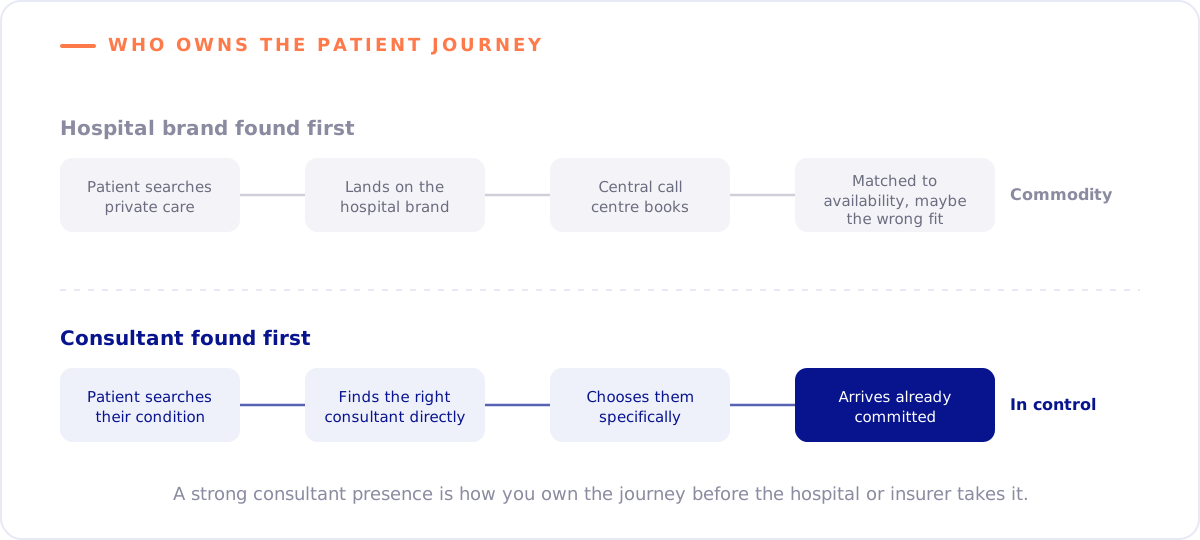
The Welbeck model, where consultants co-own the business and integrate their own booking systems with the hospital diary, is one structural fix. But for consultants who cannot take equity in a hospital, the answer is the one it has always been: build your own digital presence strongly enough that patients find you first, choose you specifically, and arrive already committed to seeing you.
That is what a properly built consultant website does. It is not just a profile; it is how a consultant owns their patient journey before the hospital, the insurer or the call centre takes over.
Building the case for ability, one signal at a time
If ability cannot be measured or marketed directly, it can be evidenced, not through self-promotion, but through the accumulation of signals that a patient doing serious research will find and read as expertise.
Ben himself shows how much material most consultants already have:
- Associate Professor at the University of Oxford
- Founder of the Oxford Stone Group
- Introduced multiple new urological treatments to Oxford, including Urolift, Rezum and Aquablation therapy
- Collaborates with manufacturers on the design and optimisation of surgical instrumentation
- Has supervised PhD studentships through industry partnerships
- Research published in endourology spanning more than fifteen years
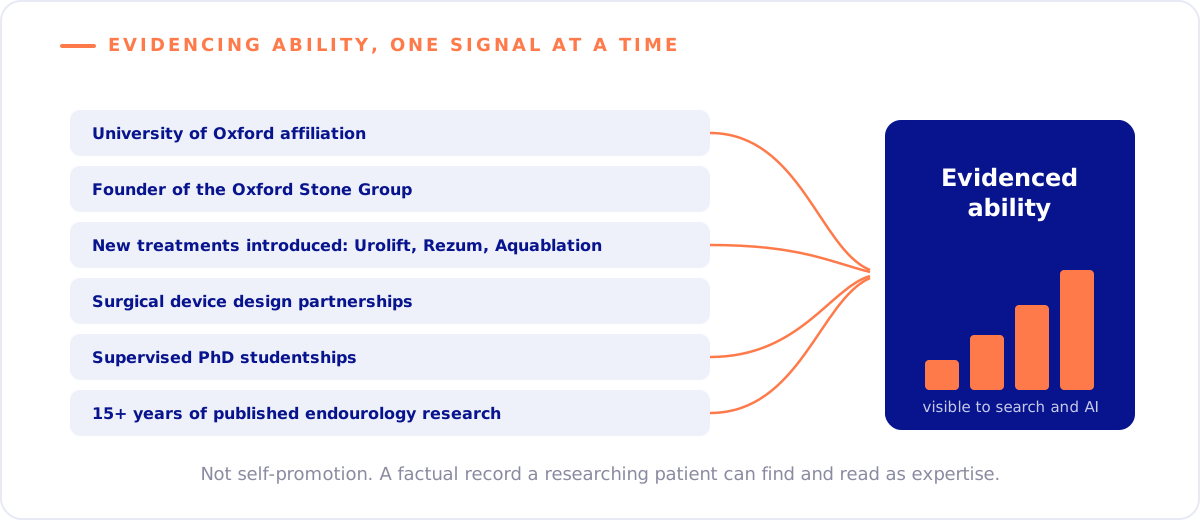
None of that is marketing copy. It is a factual record of a clinician working at the front edge of their speciality. The real question is how much of it a patient can find by doing their research online.
Woven properly into a digital presence, those signals reinforce one another: the Oxford affiliation visible on the kidney stones page, the device partnerships referenced in the biography, the Doctify profile linked from the treatment pages, and the Google reviews aggregated and on show. It all works together for both search engine optimisation and AI visibility.
The biggest difference comes when a consultant’s personal brand is built and then connected to the clinic’s brand. Digital authority, built systematically, is already doing a version of the peer knowledge that colleagues and theatre staff hold, and the consultants with the strongest credentials have the most to gain from making it visible.
The consultants who will win the next decade
The UK private healthcare market is growing fast, and Ben sees it from the inside: patient volumes rising year on year, insurance uptake increasing, more patients bypassing their GP to search for specialists directly. What Oxford Urology Associates has built over the past decade, a group practice with deep subspecialty authority, a consistent digital presence, operational systems that make availability effortless, and a brand anchored to one of the world’s most recognised universities, is as close to a blueprint as you will find.
The instructive part is how much of that blueprint was built for clinical and operational reasons rather than marketing ones. The choices that mattered most were made before marketing was even a consideration. Get the foundations right, and the marketing follows.
What our conversation added is the layer most practices are still missing: the data already sitting in their systems but going unused, the credentials colleagues know about but patients cannot find, and the trust signals that, connected and made visible, begin to close the gap between clinical excellence and digital authority.
Ben summarised it better than we could. The three A’s have always been the standard. Availability and affability are marketable; ability is not, at least not directly. But digital authority, built carefully and consistently, is the closest thing we have to making it visible, and for consultants with Ben’s depth of experience, that is a significant opportunity.
Where to start
If any of this sounds familiar, the most useful first step is an honest audit of where you currently sit: what signals are visible, what is missing, and what the opportunity looks like against the searches happening in your speciality and geography right now.
That audit is how almost every healthcare SEO engagement we run begins. If you would like to understand what building this kind of authority would look like for your practice, we are happy to take a look.
With thanks to Professor Ben Turney, Managing Partner of Oxford Urology Associates, for a conversation that ranged well beyond the original interview.